Tinnitus | What It Is, What Causes It, What You Can Do About It
What Tinnitus Actually Is
If you have tinnitus, there’s a reasonable chance you’ve already been told that there’s nothing wrong and there’s nothing to be done. And, to be honest with you, parts of that are true. But the way it’s usually said leaves people more frightened and more alone than before they asked.
So let’s start with what tinnitus actually is.
Tinnitus is the perception of a sound — ringing, buzzing, hissing, clicking, or roaring — that isn’t coming from outside you. The sound is real and genuinely being generated. But the source is inside the auditory system, not in the room. Tinnitus is a symptom, not a disease. It is your auditory system telling you something has changed.
Tinnitus is a symptom, not a disease. The distinction matters because it changes how you approach it. You are not treating the sound, you are addressing what is generating it.
Why does it sound like something?
The best explanation I know is the phantom limb. When someone loses an arm, the brain, which has spent years receiving signals from that arm, doesn’t simply go quiet. It keeps generating activity in the pathways that used to carry those signals. The result is sensation in a limb that is no longer there.
Tinnitus works by a similar principle. When the inner ear is damaged by noise, age, or other causes, it sends fewer signals up the auditory pathway. The brain, deprived of its normal input, turns up its own sensitivity. Research published in the Journal of Neuroscience demonstrated that this increase in central gain, the brain’s attempt to compensate for reduced input from the cochlea, is measurable. It isn’t a theory. It is a documented neurological response.[1] That activity, the brain interprets as sound.
“This is not imagined. This is not psychological in origin. This is neurologically generated.”
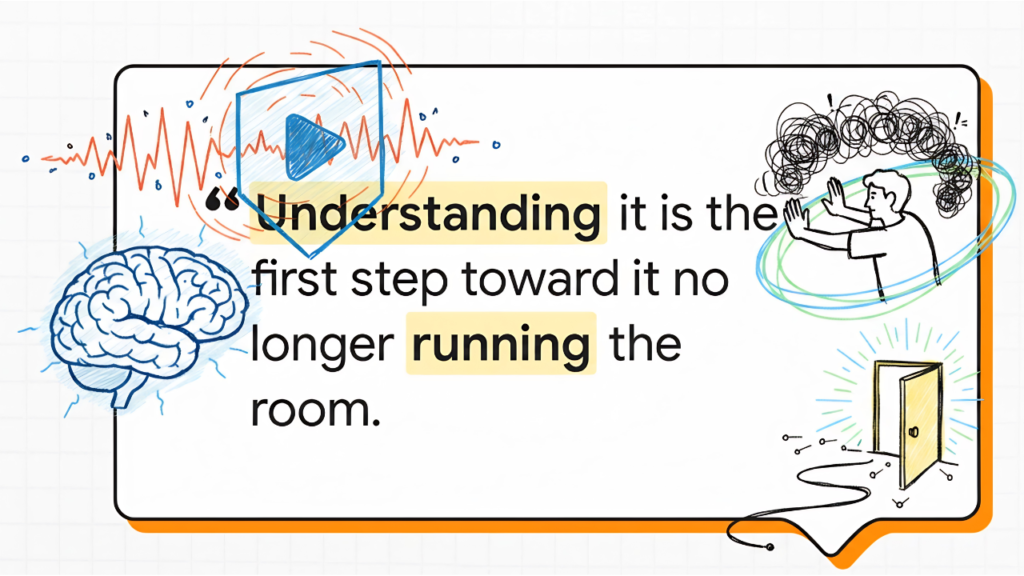
The limbic system, the part of the brain that handles emotion, threat detection, and memory gets recruited when tinnitus becomes distressing. It tags the tinnitus signal as threatening, which amplifies and prioritises it. That is not weakness. That is anatomy. And it explains why emotional and psychological factors are not secondary to tinnitus, they are part of the same circuit.
Who Gets Tinnitus?
According to NICE guidance, tinnitus affects approximately 15% of adults.[2] Around 1–2% experience tinnitus that significantly impacts the quality of life. In the UK, approximately two million people are severely affected. Prevalence increases with age, peaking in the 60–69 age group, and is more common in those with hearing loss, approximately 90% of tinnitus cases are associated with some degree of hearing loss.
The disruption tinnitus causes is real and deserves to be named: sleep difficulties, concentration problems, the hypervigilance of constantly monitoring whether it has changed, the conversations you are half-present in because part of your attention is always on the sound that only you can hear.
Red Flags: When Tinnitus Needs Prompt Assessment
Not all tinnitus is the same. Most tinnitus, the one which is bilateral, with gradual onset, present for months or years, is not a sign of something dangerous. But certain patterns require prompt investigation and should not be dismissed.
| Red Flag | Why It Matters | Action |
|---|---|---|
| Tinnitus + Sudden Hearing Loss | Sudden sensorineural hearing loss is an ENT emergency with a 72-hour treatment window. | A&E or urgent GP, same day |
| Tinnitus in one ear only | Must exclude vestibular schwannoma, a benign, slow-growing tumour on the vestibular nerve.[2] | Referral for MRI |
| Pulsatile tinnitus | Rhythmic, heartbeat-synchronous tinnitus may have a vascular cause. | Referral for imaging |
| Tinnitus with dizziness, facial numbness, or headache | Possible posterior fossa pathology. | Prompt neurological assessment |
| Tinnitus with ear pain or discharge | Middle ear pathology: otitis media, cholesteatoma. | GP or ENT examination |
A vestibular schwannoma is a benign tumour on the vestibular nerve. It grows slowly, over years, sometimes decades. When found early, there are real management options: watch and wait with regular scanning, radiosurgery, or surgical removal in selected cases. The point is not to cause alarm. The point is that unilateral tinnitus always gets investigated, because investigation is how we find the things that are manageable while they are still manageable.
What Causes Tinnitus?
The most common cause by a significant margin is noise-induced hearing loss, cumulative, often building over years before tinnitus appears. The moment of damage may have occurred long before the tinnitus began.
Age-related hearing loss (presbycusis) is the second most common cause, particularly in older adults. Tinnitus is often the first thing the patient notices, before they are even aware that their hearing has changed.
Other established causes include:
- Cerumen impaction — wax blocking the ear canal. One of the few entirely reversible causes. Microsuction or irrigation can resolve the tinnitus entirely.
- Middle ear conditions — otitis media, Eustachian tube dysfunction, otosclerosis.
- Ototoxic medications — high-dose aspirin, NSAIDs, aminoglycoside antibiotics, platinum-based chemotherapy agents, and quinine. If tinnitus began after a new medication, this is worth raising with the prescribing doctor.
- Menière’s disease — tinnitus as part of a triad with episodic vertigo and fluctuating hearing loss.
- Vestibular schwannoma — rare, but unilateral tinnitus is its most common presenting symptom.
The Silence Myth and Why It Makes Things Worse
Almost every tinnitus patient arrives having tried, or been advised to try, silence. Rest your ears. Give them quiet. It makes intuitive sense, as rest helps healing in almost every other context.
In tinnitus, it does the opposite.
Silence removes all the other acoustic input that was competing with the tinnitus signal for the brain’s attention. With nothing else to process, the brain’s sensitivity to the signal increases, and the tinnitus becomes louder and more intrusive. This is not anecdotal, it is consistent with the central gain model.
Low-level background sound: a fan, nature sounds, music at a gentle volume reduces the contrast between the tinnitus and the acoustic environment. The tinnitus does not disappear, but the brain’s alarm response to it reduces. This is called sound enrichment, not masking. The goal is not to drown the sound out, it is to give the brain something else to process.
What the Evidence Actually Supports
There is no single cure for tinnitus. This is true and it must be said clearly, because patients deserve honesty more than false comfort. But the absence of a cure is not the absence of help, and those two things are not the same.
The goal of treatment is habituation: a state where the tinnitus is present but no longer distressing. Most people reach it, with the right support at the right time.
What does not work
- Ginkgo biloba — no evidence of benefit in high-quality RCTs. A 2022 Cochrane review confirmed negative findings.
- Pharmacological treatments — no drug has demonstrated consistent benefit in robust RCTs.
- Ear candles — no plausible mechanism and carry a burn risk.
- Seeking silence — as above, counterproductive.
See Your Own Patterns
You cannot share your tinnitus with anyone.
But you can see your patterns. The free Tinnitus Tracker
logs daily volume, triggers, sleep impact, and mood — and shows you trends over time. Use it for 30 days, then bring your data to your ENT, therapist, or audiologist. Sometimes showing is more powerful than describing.
A Note on Living With It
Tinnitus confronts people with a particular kind of difficulty. Not pain, not disability in the conventional sense, but an uninvited presence. A sound that arrived without permission and won’t leave.
One of the most clinically important things I observe is that the more a patient resists tinnitus, the more they brace against it, check it, monitor it, the more distressing it becomes. The attention feeds the signal.
This creates what feels like an impossible position: fight it, and it worsens. Accept it, and that feels like surrender. What the evidence and what patients who have found their way through this shows is that there is a third option. Not fighting, not surrendering. Learning to live alongside something without letting it define you. That is what habituation actually means. It is harder, but more available, than most people are told.
Free Download
Tinnitus: First Steps
The red flags checklist, the five questions to bring to your appointment, and your first steps this week — all in one printable guide.
Frequently Asked Questions
Will tinnitus go away on its own?
Acute tinnitus, after a loud concert or noise exposure, often resolves within hours to days. Chronic tinnitus (present for more than three months) rarely resolves completely, but most people achieve habituation: a state where the sound is present but no longer distressing. Active management significantly improves outcomes compared to waiting.
What is the main cause of tinnitus?
The most common cause is noise-induced hearing loss, often accumulated over years before tinnitus appears. Age-related hearing loss is the second most common cause, particularly in older adults. Other causes include earwax blockage, middle ear conditions, certain medications, and, in cases of tinnitus in one ear only, vestibular schwannoma, which must be excluded.
Is tinnitus a sign of something serious?
In most cases, particularly when it affects both ears and came on gradually, tinnitus is not a sign of something dangerous. However, certain patterns require prompt investigation: tinnitus in one ear only, pulsatile tinnitus, tinnitus accompanied by sudden hearing loss, and tinnitus alongside dizziness or facial symptoms. These should be assessed by a doctor.
Why does silence make tinnitus worse?
Silence removes all the acoustic input that was competing with the tinnitus signal for the brain’s attention. The brain’s sensitivity to the signal increases. Low-level background sound, like nature sounds, a fan, or quiet music reduces the contrast and helps the brain’s alarm response settle. This is called sound enrichment and is evidence-based.
Does CBT help tinnitus?
Yes. CBT is the highest-evidence intervention for tinnitus distress, explicitly recommended by NICE (NG155, 2020). It does not reduce the sound, but targets the limbic system’s response to the signal, the mechanism behind most tinnitus-related suffering. It is increasingly available in digital formats.
References
- Schaette R, McAlpine D. Tinnitus with a Normal Audiogram: Physiological Evidence for Hidden Hearing Loss and Computational Model. Journal of Neuroscience. 2011;31(38):13452–13457.
- National Institute for Health and Care Excellence. Tinnitus: assessment and management. NICE Guideline NG155. London: NICE; 2020.
- Bhatt JM, Lin HW, Bhattacharyya N. Prevalence, severity, exposures, and treatment patterns of tinnitus in the United States. JAMA Otolaryngology–Head & Neck Surgery. 2016;142(10):959–965.
- Sereda M, et al. Ginkgo biloba for tinnitus. Cochrane Database of Systematic Reviews. 2022; Issue 11.
- Jastreboff PJ. Phantom auditory perception (tinnitus): mechanisms of generation and perception. Neuroscience Research. 1990;8(4):221–254.
- Axon PR, et al. Incidence of Vestibular Schwannoma in Patients with Unilateral Tinnitus: Systematic Review and Meta-Analysis. Otology & Neurotology. 2023. PMID: 37621105.
- Anatomical illustrations from Smart Servier Medical Art, licensed under CC BY 4.0.
⚠️ Medical disclaimer: This article is for educational purposes only and does not constitute medical advice. It is not a substitute for a consultation with your own GP or ENT specialist. If you are concerned about your symptoms, please seek professional assessment.